By Arbrit Safety Training TeamPublished
Quick answer: For most general employees, a Level 1 or Level 2 first aid course (1 day) is enough. Designated workplace first aiders and staff in high-risk sites such as construction, oil and gas or remote camps should take a Level 3 course (2–3 days). Level 4 (3–4 days) is for instructors and supervisors who lead emergency programmes. Highfield first aid certificates are typically valid for 3 years.
When someone collapses at work, the first few minutes decide what happens next. In a busy Riyadh office that might mean a colleague starting CPR. On a remote site, far from the nearest hospital, it might mean keeping an injured worker stable until an ambulance arrives. Either way, the person who helps needs the right level of training.
Highfield first aid courses come in several levels, which can be confusing. This guide explains each one and helps you choose.
Do Saudi employers need trained first aiders?
Saudi Labour Law requires employers to keep first aid cabinets stocked with the supplies needed for first aid, as set out by the Ministry of Human Resources and Social Development. Larger workplaces carry extra duties, such as dedicated medical staff and first aid rooms. Supplies are only useful if someone knows how to use them, so most employers train designated first aiders. Many clients and projects also require a trained first aider on every shift.
What is Highfield?
Highfield Qualifications is a UK awarding organisation whose first aid, food safety and fire safety qualifications are used by employers worldwide. Its first aid courses are delivered by approved centres, with a written assessment and hands-on practical demonstrations.
Highfield first aid levels at a glance
| Level | Course length | Best for |
|---|---|---|
| Level 1–2 | 1 day | General employees, office staff, small workplaces |
| Level 3 | 2–3 days | Designated first aiders, safety officers, high-risk sites |
| Level 4 | 3–4 days | Trainers and supervisors leading emergency programmes |
Level 1 and Level 2: essential skills for everyone
These short courses give employees the confidence to act in an emergency. A typical example is the Level 2 International Award in Basic Life Support and Use of an AED, which teaches CPR and how to use a defibrillator. They suit office teams, retail staff and anyone who wants basic life-saving skills.
Level 3: for designated workplace first aiders
Level 3 is the most popular choice for companies. It prepares people to be the named first aider on a site or shift. Courses at this level include:
- Level 3 Award in First Aid at Work
- Level 3 International Award in Emergency First Aid at Work and Use of an AED
- Level 3 Award in First Aid Response
- Level 3 Award in Emergency Care for First Responders
- Level 3 International Award in Emergency Paediatric First Aid (for schools, nurseries and family-facing roles)
Level 3 is the right fit for construction, oil and gas, manufacturing and remote camps, where serious injuries are more likely and help may be further away.
Level 4: for trainers and emergency leads
Level 4 is an instructor-level course. It suits HSE professionals and supervisors who train others or lead emergency response programmes within their organisation.
What will you learn?
Depending on the level, first aid training covers:
- Assessing an emergency and keeping yourself safe
- CPR and using an AED
- Managing an unresponsive casualty and the recovery position
- Controlling bleeding and treating shock
- Choking, burns, fractures and head injuries
- Recognising heart attacks, strokes and seizures
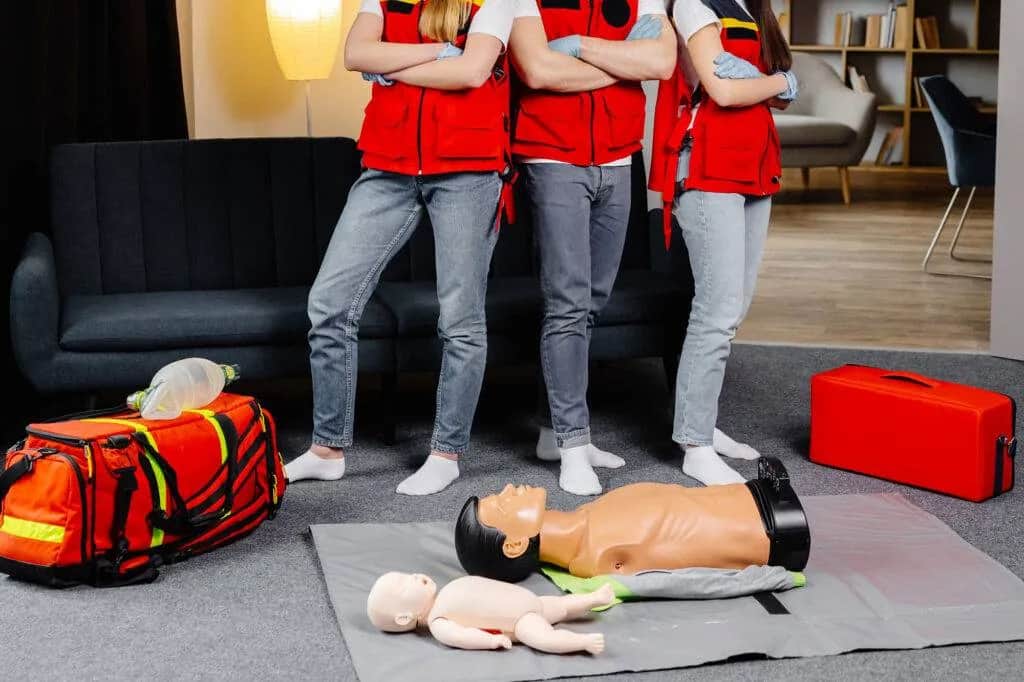
Practical practice is a key part of every course. Learners show their skills on manikins and in emergency simulations, not just on paper.
Heat illness: a first aid priority in Saudi Arabia
Saudi summers are among the hottest in the world, which makes heat exhaustion and heat stroke real workplace risks. First aiders should be able to recognise heat illness early, cool a casualty quickly and know when to call for emergency help. Ask your training provider to include heat-related scenarios.
How long is a first aid certificate valid?
Highfield first aid certificates are typically valid for 3 years. Skills fade faster than that, so many employers run short refreshers in between. Track expiry dates for every first aider so your sites are never left without cover.
How many first aiders do you need?
There is no single number for every workplace. Base it on your risk assessment: the number of workers, the type of work, shift patterns, and how far you are from medical help. High-risk and remote sites need more first aiders than a city office. Plan for holidays and absences too.
Frequently asked questions
Which first aid course is best for workplace first aiders in Riyadh? A Level 3 course, such as the Level 3 Award in First Aid at Work or Emergency First Aid at Work, is the usual choice for designated workplace first aiders.
How long does a first aid course take? Level 1–2 courses take 1 day, Level 3 takes 2–3 days, and Level 4 takes 3–4 days.
How long is a Highfield first aid certificate valid? Typically 3 years. Refresher training is recommended before it expires.
Do I need experience to join a first aid course? No experience is needed for most courses. Experience is advised for advanced and instructor levels.
Can first aid training be held at our company site? Yes. Arbrit Safety delivers first aid training at its Riyadh centre and on-site across Saudi Arabia.
Book first aid training in Riyadh
Arbrit Safety delivers Highfield first aid courses at Levels 1–4 at its Riyadh centre in Al Malaz and on-site across the Kingdom, with practical, hands-on sessions. For CPR and Basic Life Support, see HSI training. Contact the Riyadh team for dates and group bookings.