By Arbrit Safety Training TeamPublished
Quick answer: Under Saudi Labour Law, employers must tell workers about the hazards of their job before they start, provide personal protective equipment and train workers to use it, take fire precautions, and keep first aid supplies on site. On top of these legal duties, many clients and major projects in Saudi Arabia ask for recognised certificates such as IOSH, LEEA, Highfield first aid and NFPA. The right training depends on each worker's role and risks.
Saudi Arabia is building at a pace few countries have ever matched. Giga-projects, new industrial cities, metro lines and stadiums are bringing hundreds of thousands of workers onto sites across the Kingdom. With that growth comes a simple question for every employer: what safety training do we actually need to provide?
This guide explains the legal basics, the requirements clients usually add, and how to plan training for each role in your team.
What does Saudi law require employers to do?
The Saudi Labour Law includes a full chapter on worker safety and health. According to the Ministry of Human Resources and Social Development (HRSD), employers must:
- Inform workers of job hazards before they begin work
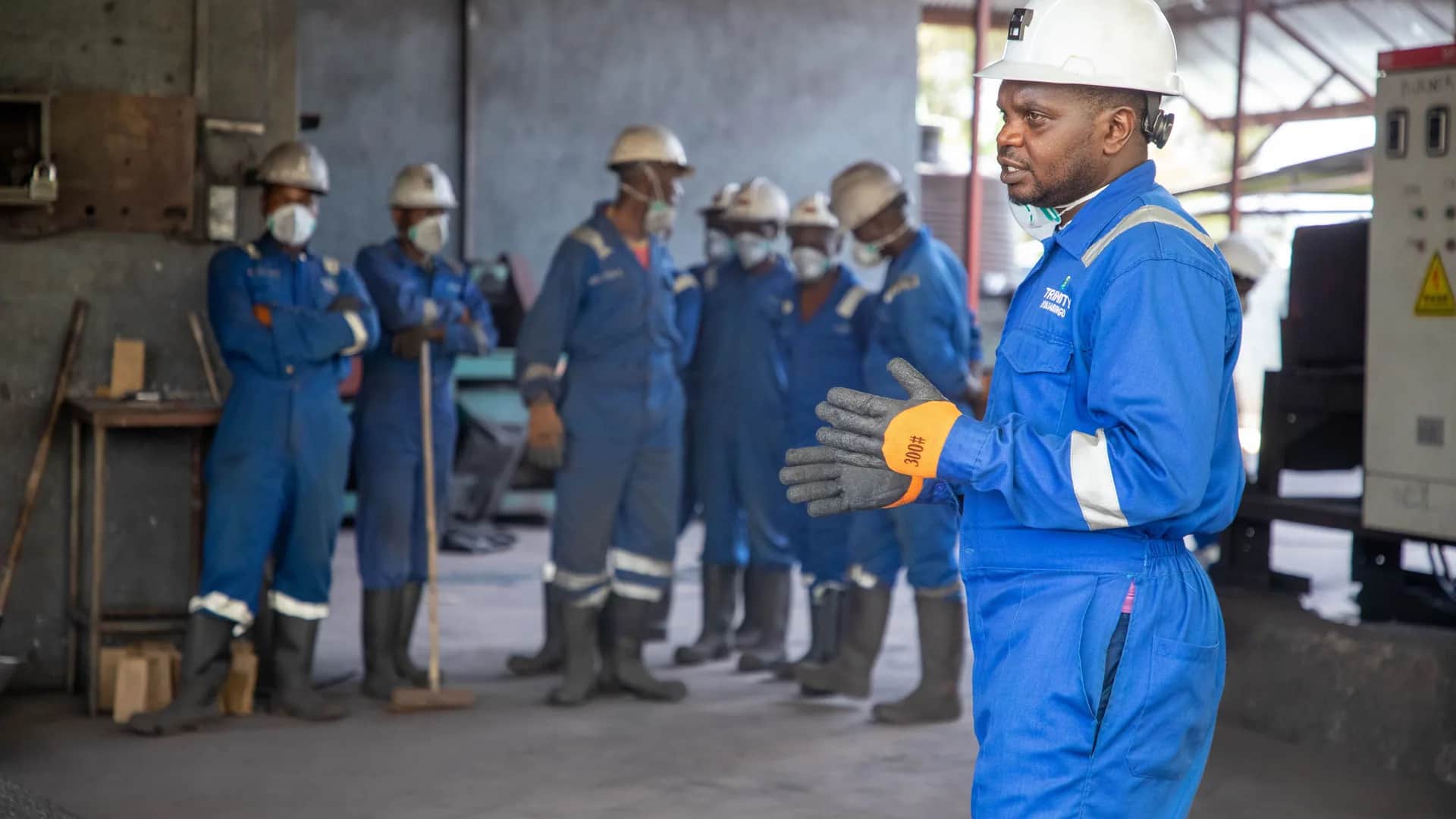
- Supply suitable personal protective equipment (PPE) and train workers to use it, at no cost to the worker
- Keep the workplace safe and clean, with proper lighting and drinking water
- Post safety instructions in Arabic, and in other languages workers understand where needed
- Take precautions against fire, including keeping safety exits clear and usable
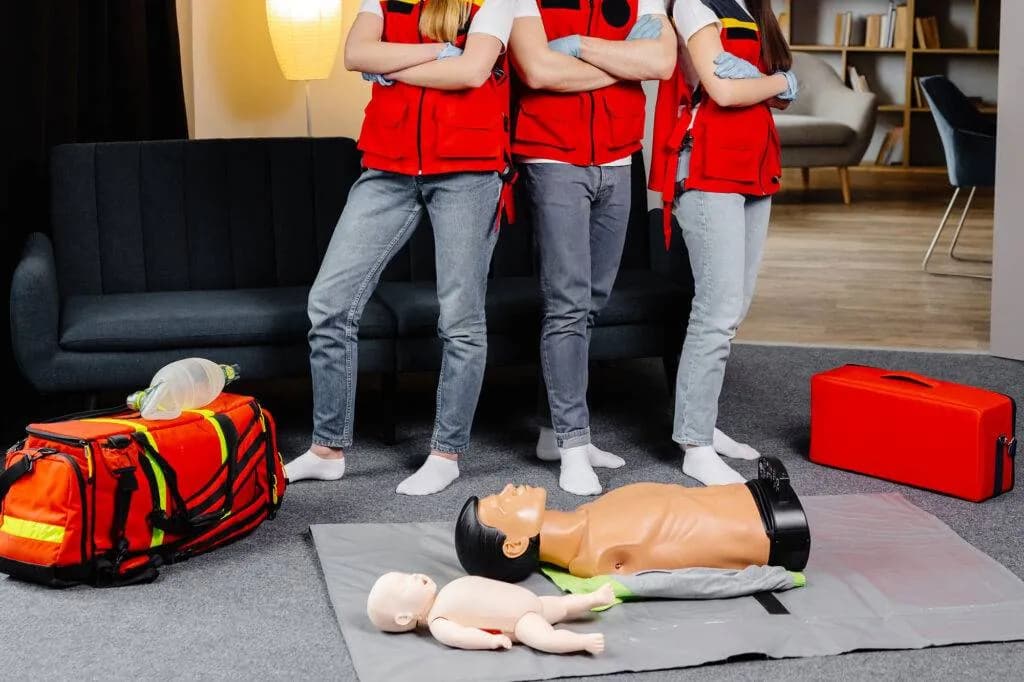
- Keep first aid cabinets stocked with the supplies needed for first aid
- Treat and cover the costs of workers injured at work
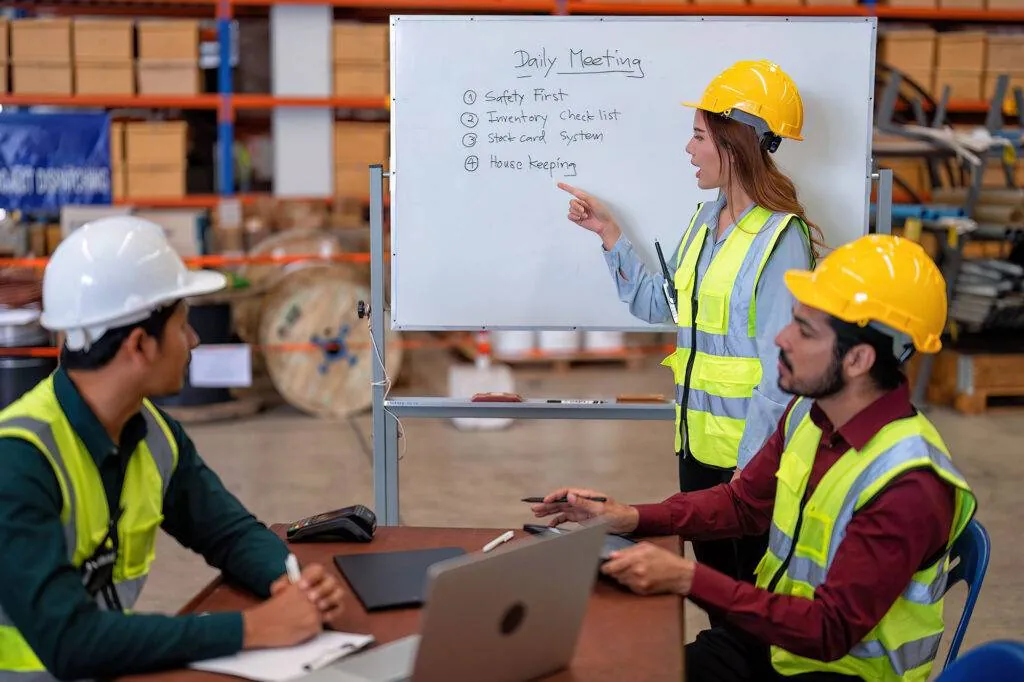
In practice, “train workers to use PPE” and “inform them of hazards” mean structured safety training. A toolbox talk alone rarely proves that a worker understood the risks.
The summer heat rules every employer must plan for
Heat stress is one of the biggest risks on Saudi worksites. Every summer, the HRSD bans work under direct sunlight from 12:00 to 15:00 between 15 June and 15 September for private-sector establishments (Gulf News). The ministry has also issued procedural guidelines on preventing the effects of direct sun exposure and heat stress.
That makes heat-stress awareness part of any sensible training plan. Supervisors should know how to schedule work around the ban, spot early signs of heat illness, and give first aid when someone collapses.
What do clients and major projects usually require?
The law sets the minimum. Clients often set the bar higher. Large contractors, oil and gas operators and giga-project developers commonly ask for:
- Internationally recognized certificates from bodies such as IOSH, LEEA, Highfield, STI and NFPA
- Trained first aiders on every shift
- Certified lifting personnel for crane and rigging work
- Competent scaffolders and inspectors for work at height
- Valid, in-date certificates, often checked at site induction
If your team arrives with expired or unrecognised certificates, you can lose days to retraining. Check each contract's HSE requirements before mobilising.
Which training does each role need?
| Role | Recommended training |
|---|---|
| All site workers | General HSE awareness, IOSH Working Safely, heat-stress awareness |
| Supervisors and team leaders | IOSH Managing Safely |
| Designated first aiders | Highfield First Aid (Level 3) |
| Fire wardens | Highfield Fire Safety |
| Lifting supervisors and riggers | LEEA lifting courses |
| Scaffolders and inspectors | STI scaffolding courses |
| Company drivers | RoSPA Defensive Driving |
| HSE managers | ISO 45001 Lead Auditor or Qualifi Level 7 Diploma |
How to build a training plan in 5 steps
- List every role and its main hazards. Use your risk assessments as the starting point.
- Check legal and client requirements. Note which certificates each contract asks for.
- Match roles to courses. Use the table above as a guide.
- Track expiry dates. Many certificates, including first aid, need renewing every few years.
- Choose an accredited provider. Confirm the provider's approval with the awarding body, and ask whether training can run at your site.
Why training pays off
Good safety training is more than compliance. Trained teams make fewer mistakes, report hazards earlier and recover faster when something goes wrong. For contractors, a well-trained workforce is also a selling point. Clients trust teams that arrive ready to work safely from day one.
Frequently asked questions
Is safety training mandatory in Saudi Arabia? Yes. Saudi Labour Law requires employers to inform workers of job hazards and train them to use protective equipment. Specific certificates are usually required by clients and projects rather than named in the law.
When is the midday work ban in Saudi Arabia? Work under direct sunlight is banned from 12:00 to 15:00 every day between 15 June and 15 September for private-sector establishments.
Who regulates workplace safety in Saudi Arabia? The Ministry of Human Resources and Social Development (HRSD) oversees worker safety under the Labour Law, working with the National Council for Occupational Safety and Health.
Which safety certificate is most requested in Saudi Arabia? It depends on the role. IOSH courses are common for supervisors and workers, Highfield first aid for first aiders, and LEEA for lifting operations.
Can safety training be held at our site in Saudi Arabia? Yes. Many providers, including Arbrit Safety, offer on-site training across the Kingdom as well as classes in Riyadh.
Plan your team's training with Arbrit Safety
Arbrit Safety Training & Consultancy runs accredited safety courses at its Riyadh centre in Al Malaz and on-site across Saudi Arabia. Arbrit was the first LEEA Licensed Training Partner in KSA and the UAE, and courses are available in English, Arabic, Hindi and Urdu. Contact the Riyadh team to build a training plan for your workforce.